

Recent reforms to Queensland’s Blue Card system have introduced significant changes, with 543 Blue Cards suspended under new powers that commenced on 20 September 2025. These changes represent the most substantial overhaul of the state’s working with children...
News
Other News
Revocation of Probate Obtained by Fraud
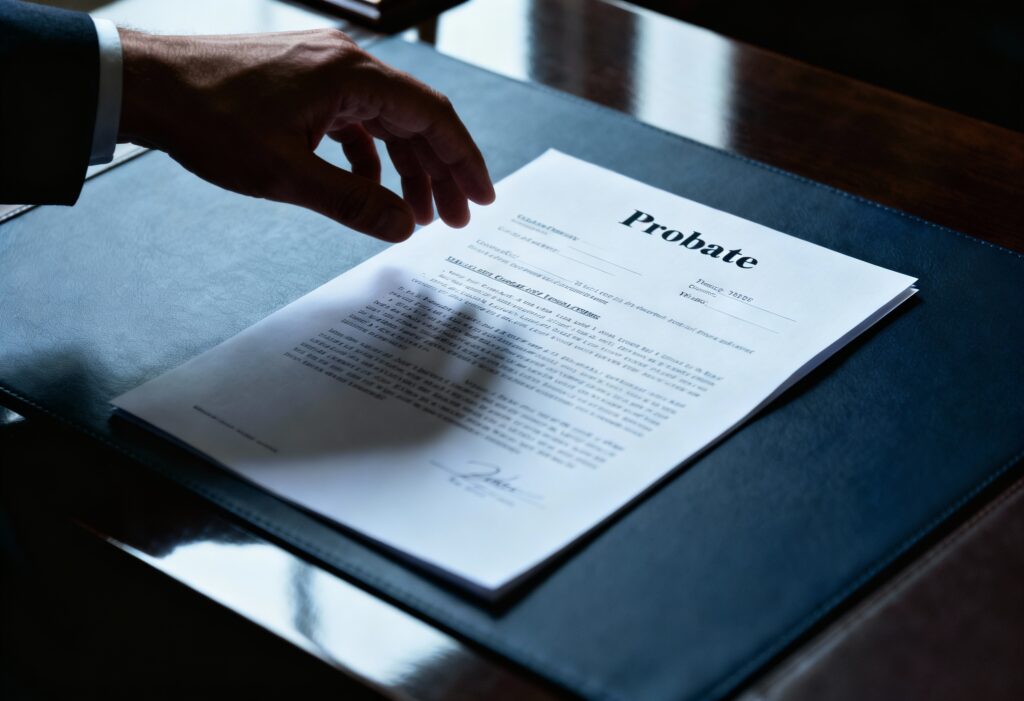
The Victorian Supreme Court case of Ramos[1] highlights the risks to the legal profession of identity theft in relation to probate matters.
An application was made by Victorian law firm McManus and Co lawyers (the law practice) to the Supreme Court to revoke a grant of probate on the basis that it was obtained by fraud.
The deceased died in South Africa on 9 July 2021 leaving a Will dated 10 January 2018 naming two executors.
Letters of Executorship were granted on 3 November 2021 to the executors in South Africa.
In July 2023, the law practice received instructions from individuals falsely claiming to be the executors of the deceased estate wishing to apply for probate.
The law practice was provided with certified copies of the grant of probate made in South Africa, the deceased’s death certificate and the deceased’s will. These documents appeared to be genuine.
The law firm requested and received copies of identification documents from the two purported executors which also appeared to be genuine.
Probate was granted by the Supreme Court on 13 September 2023.
The proceeds of the deceased’s ANZ bank account were paid into the law practice’s trust account ready for distribution. The purported executors requested that the law practice distribute those funds at their direction.
Prior to final distribution of the estate funds, the law practice became suspicious of the purported executors as communication between them and the law practice because ‘emotive and more frequent’. The purported executors also refused video conferencing with the law practice citing poor internet connectivity.
The law practice acting under these suspicions, undertook publicly available searches of the purported executors’ names. The law practice found and contacted the true executors of the deceased’s estate who had no knowledge of any of the transactions or correspondence that have been undertaken by the law practice.
The law practice with the authority of the true executors then sought revocation of the 2023 grant stating that the true executors were concerned that the purported executors may be able to exploit the 2023 grant in some way if it is not revoked. The court agreed. It was satisfied that the 2023 grant was obtained by fraud and considered the need for the proper administration of the deceased’s estate. The court revoked the 2023 grant.
The court raised concerns that there appeared to be ‘weaknesses in the systems of record, maintenance and communication that can be exploited by persons with criminal intent’. There was no explanation how the purported executors obtained apparent genuine copies of the probate documents filed by the true executors in South Africa.
The law practice has since adopted practices to reduce the risk of this fraud occurring in future.
[1] Re RAMOS [2025] VSC 19.
📞 1800 957 936
🌐 rmolaw.com.au
📧 mail@rmolaw.com.au
This article is for your information and interest only. It is not intended to be comprehensive, and it does not constitute and must not be relied on as legal advice. You must seek specific advice tailored to your circumstances.
Article Authorised by Tim Ryan
Get in Touch